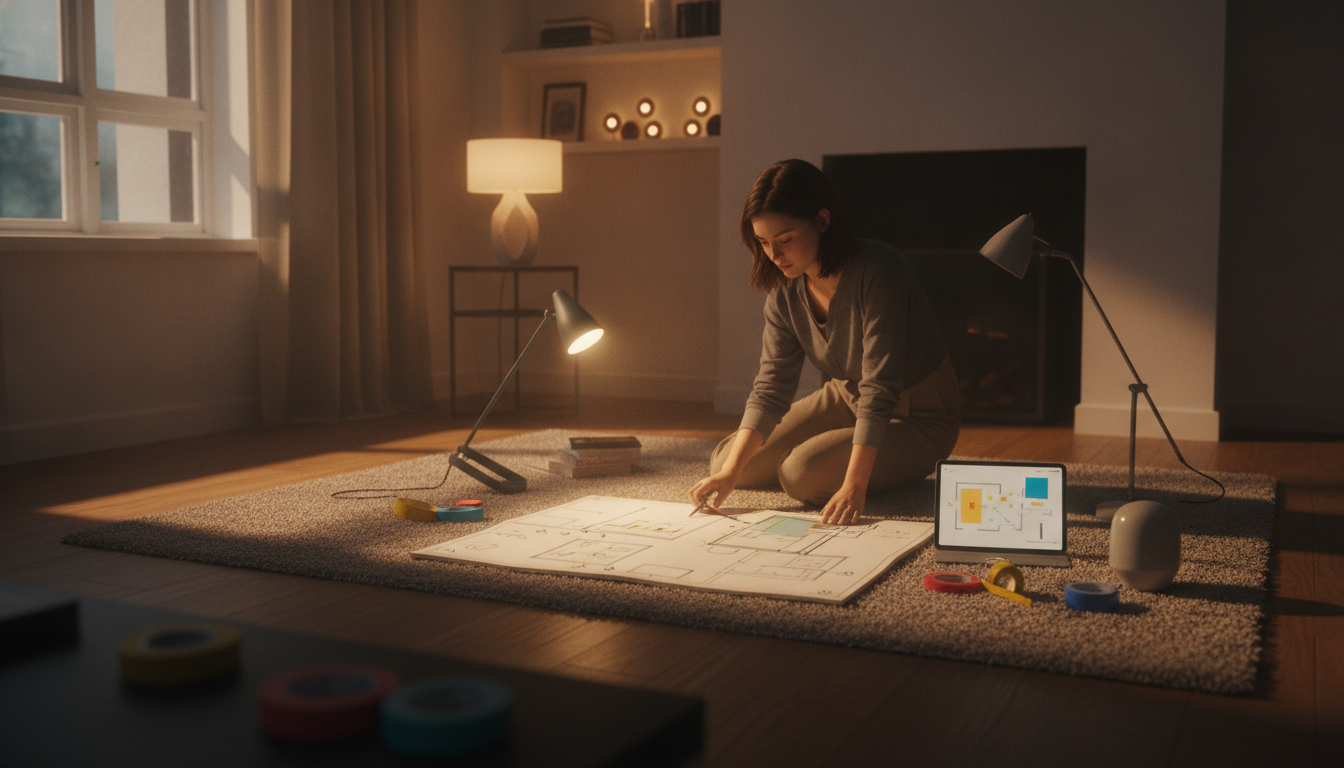
A good lighting plan starts by mapping what the room needs to do, then layering light so it looks comfortable and works well at every hour. Instead of relying on a single ceiling fixture, combine ambient, task, and accent lighting and control them independently. This approach reduces glare, adds depth, and makes the space feel more intentional.
Write down how the room is used—reading, cooking, working, entertaining, getting ready—and note where shadows or dark corners happen now. This quickly reveals where you need focused task lighting (like at a desk) versus softer ambient light.
Ambient provides overall illumination (ceiling fixtures, recessed lights, or a central pendant). Task supports specific actions (under-cabinet lights, vanity lights, floor lamps by seating, adjustable desk lamps). Accent adds visual interest (wall sconces, picture lights, shelf lighting, or a directional spotlight to highlight décor).
Start with where light needs to land: over work surfaces, beside mirrors (not above), near seating, and along pathways. Then select fixtures that match the room scale and throw light in the right direction. Keep sightlines in mind so bulbs aren’t exposed at eye level.
For most living spaces, warm-white bulbs (around 2700K–3000K) feel inviting, while kitchens, baths, and work zones can lean slightly cooler for clarity. Use shades, diffusers, and indirect light to soften hot spots. Add dimmers wherever possible so one room can shift from bright and practical to relaxed and cozy.
For a more detailed walkthrough and examples, visit How to design a lighting plan for a room.
For Room Lighting Plan: Layer Ambient, Task & Accent Light, the best answer depends on fit, material, care instructions, and how the product will be used day to day.
Ambient lighting fills the room overall, task lighting concentrates on work areas, and accent lighting highlights features like art, shelves, or architectural details. Using all three creates balanced, flexible lighting.











Leave a comment